
 Image 1 of 5
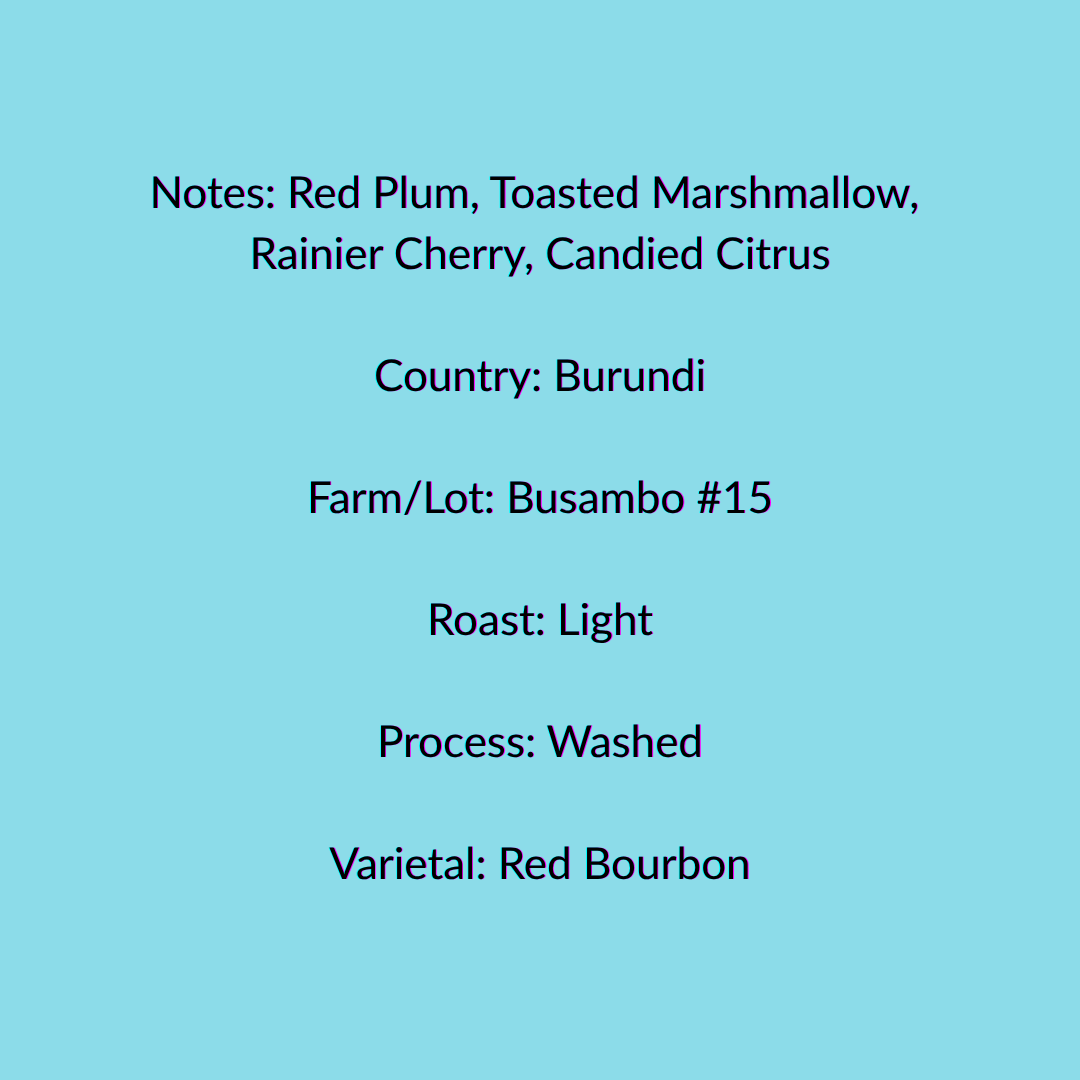 Image 2 of 5
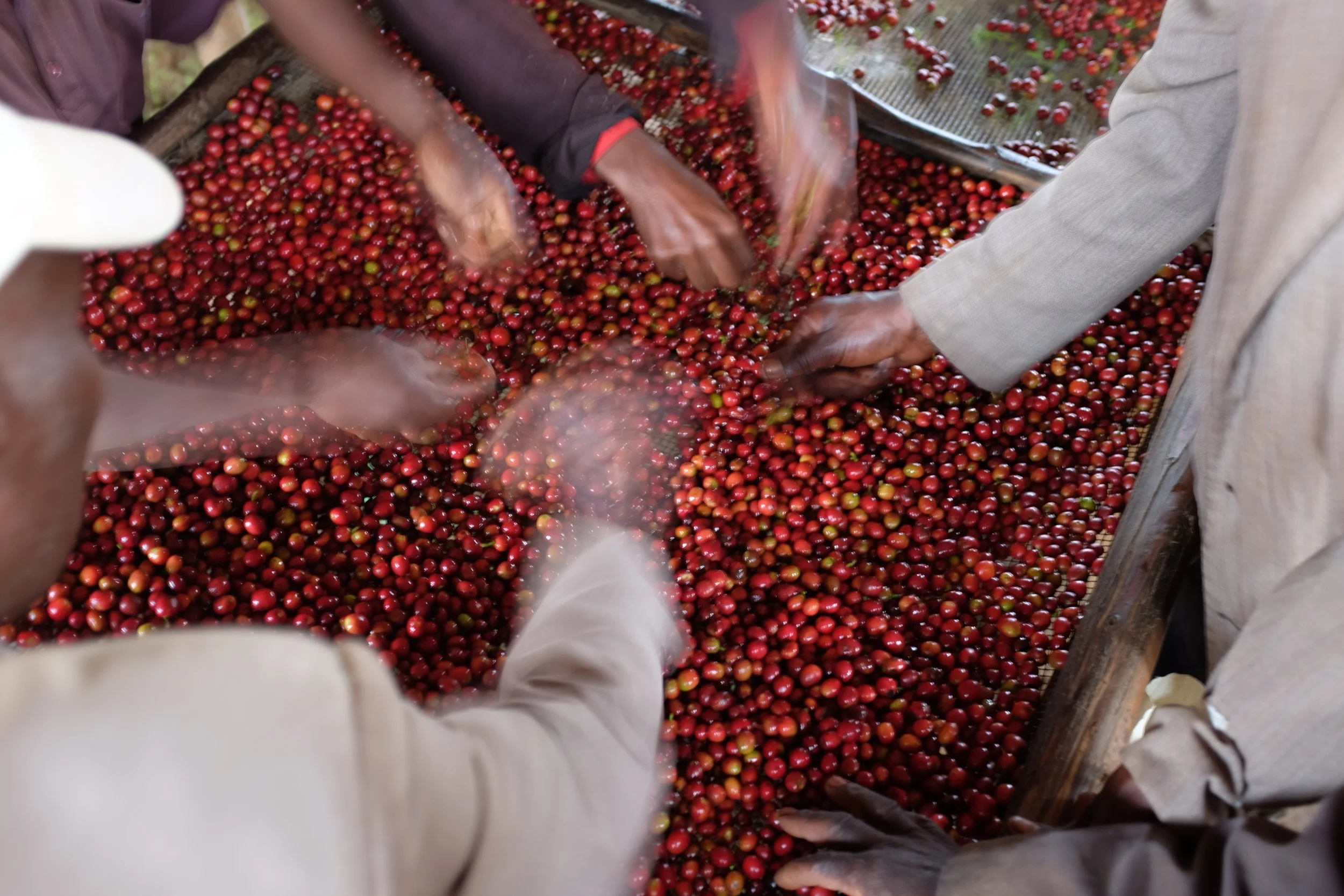 Image 3 of 5
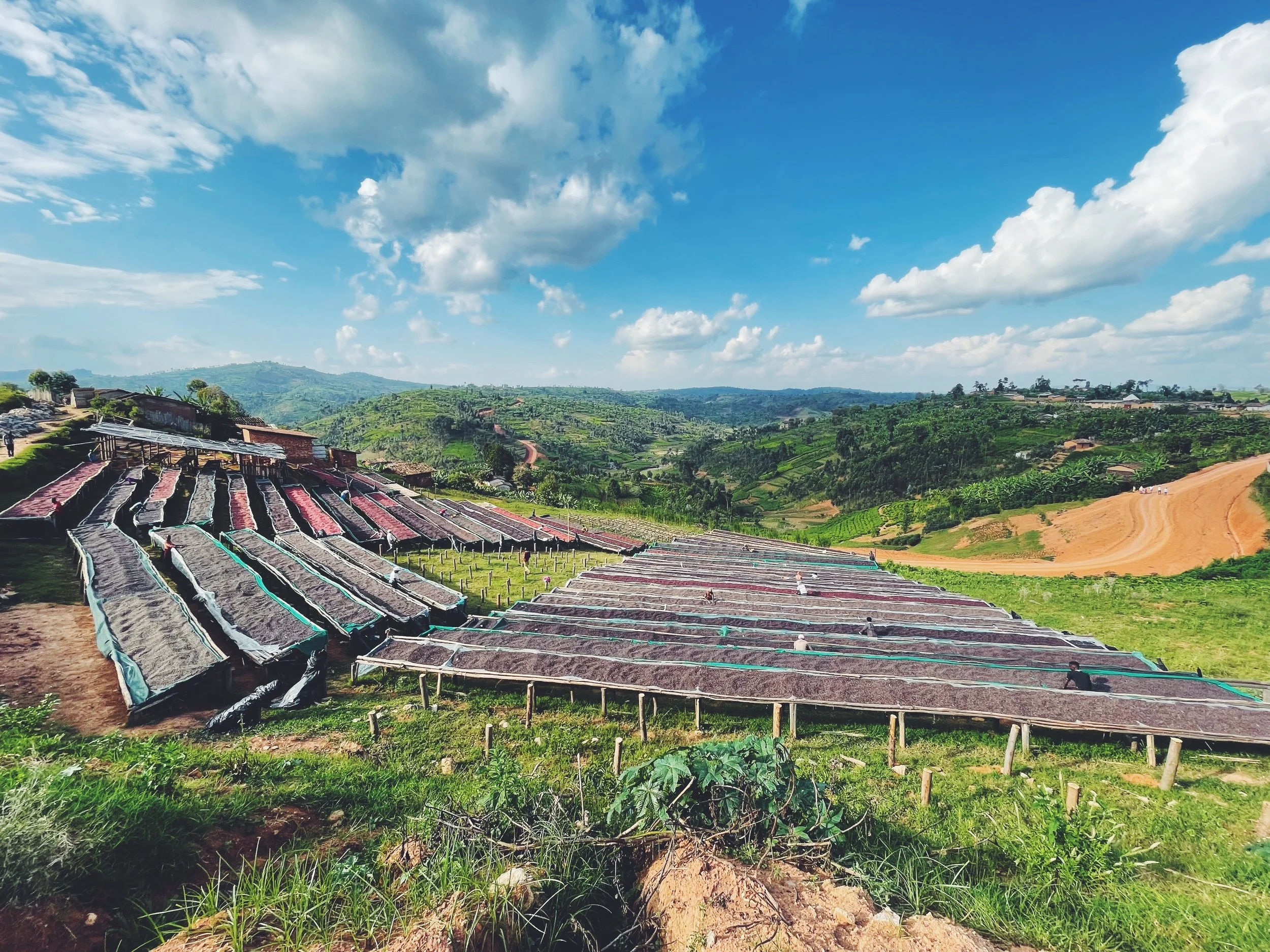 Image 4 of 5
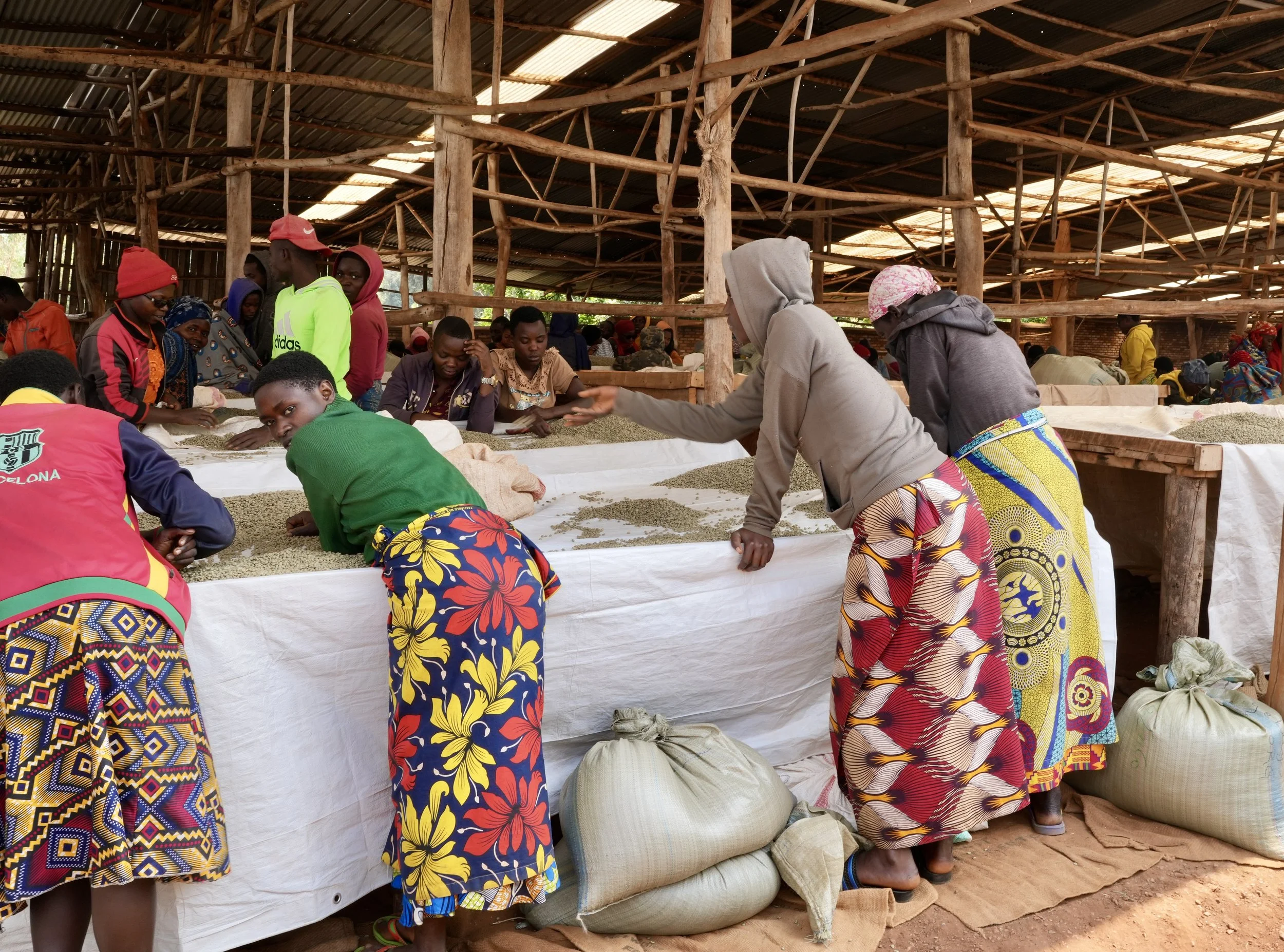 Image 5 of 5
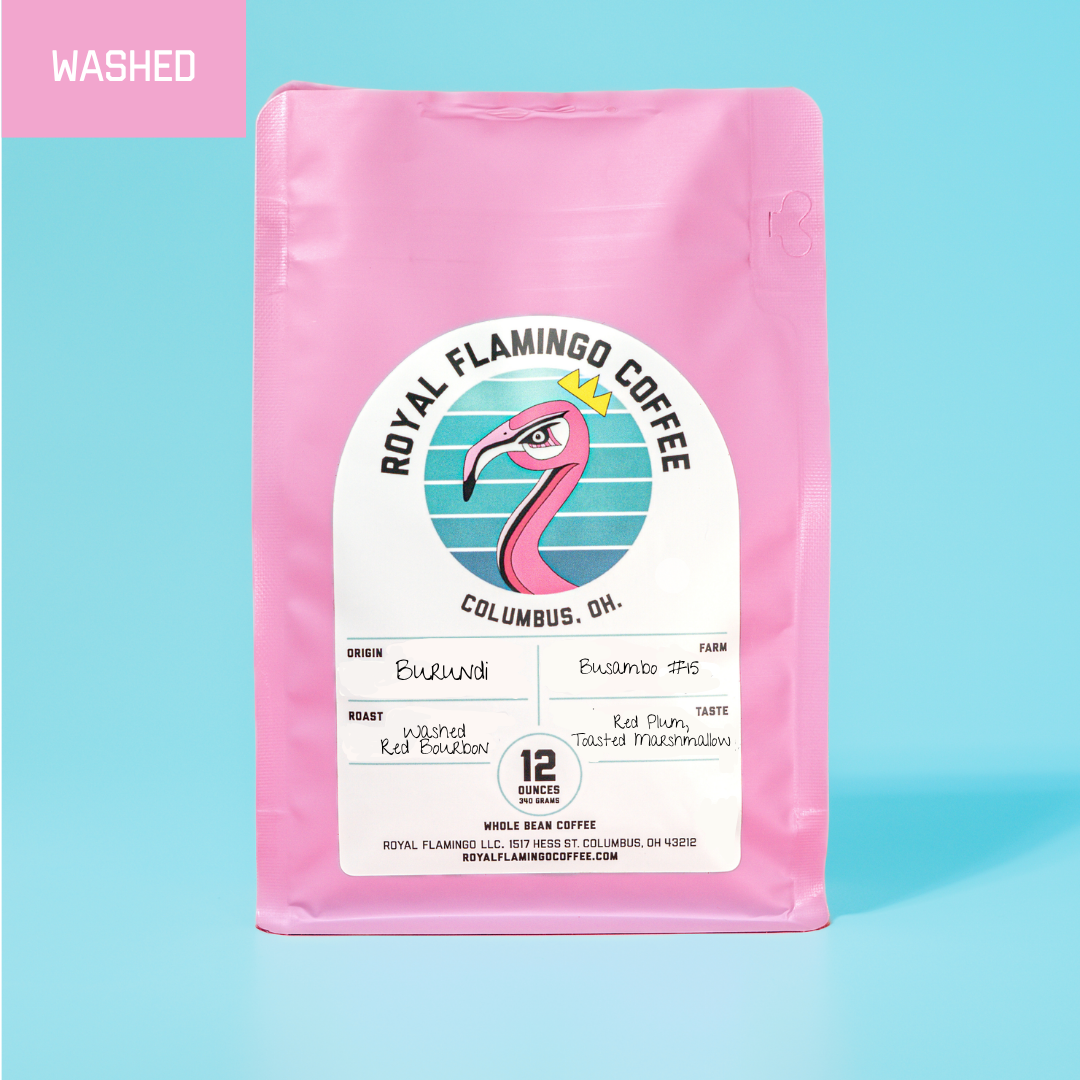
Tasting experience: Red Plum, Toasted Marshmallow, Rainier Cherry, Candied Citrus
Country: Burundi
Farm/Lot: Busambo #15
Roast: Light (City)
Process: Washed
Varietal: Red Bourbon
Notes from Red Fox:
Burundi is a small, landlocked nation in East Africa, bordered by Tanzania, Rwanda, the Democratic Republic of Congo, and Lake Tanganyika—the deepest lake in Africa and the second-largest freshwater lake in the world. Spanning nearly 28,000 square kilometers, Burundi is one of the continent’s most densely populated countries, with nearly 13 million people. The vast majority of the population practices subsistence farming, and cash crops like coffee and tea are essential lifelines, providing the income necessary for education, livestock, and household needs. Reaching the coffee heartland requires flying into Bujumbura, the capital and site of the country’s only paved airport. This low-elevation region is characterized by hot, dry conditions and rice cultivation. A two-hour drive from the capital leads to the town of Kayanza, though reaching the farms of the Busambo community—perched on the hill of the same name—requires an additional hour of travel over rugged dirt roads. Near the Kayanza area is located the Umoco washing station—named after the Kirundi word for “light”— which serves as the central hub for the surrounding hills. Producers typically deliver their cherries on foot, though some utilize bicycles or motorcycles. Coffee here is primarily grown in full sun, often without the use of fertilizers due to their high cost. For subsistence, families also cultivate bananas, maize, cassava, and beans. At Umoco, the coffee undergoes a meticulous processing routine: a 12-hour wet fermentation is followed by a second 12-hour fermentation in cement tanks. The parchment is then dried for 20 to 25 days on traditional African raised beds. These coffees thrive at exceptional altitudes between 1,800 and 2,200 meters above sea level, rooted in rich red clay soils. The region borders the Kibira National Forest, a dense canopy that fosters cooler temperatures and higher rainfall than other Burundian coffee regions. Known locally as the “up country,” this area also holds deep historical weight as the burial site of Burundi’s former kings, whose graves are sheltered by towering indigenous trees. Operating in Burundi presents extreme challenges. It remains one of the world's poorest nations, with a per capita GDP often estimated between 10 and 20 USD. This poverty is intertwined with systemic issues, including food insecurity, ethnic conflict, fuel shortages, and political instability, all of which complicate the development of reliable, long-term trade relationships. Government involvement often adds layers of complexity rather than relief. Heavy bureaucracy and frequent regulatory shifts create a difficult environment for producers. Furthermore, the national coffee authority, ODECA, acts as both a regulator and a producer, a conflict of interest that leaves only those producing high volumes or exceptional quality with a path to profitability. Despite these significant obstacles, many Burundian producers remain committed to building resilient, quality-focused operations. Red Fox is dedicated to supporting these efforts by opening new markets, ensuring producers can access competitive prices and secure more sustainable futures for their families.
Tasting experience: Red Plum, Toasted Marshmallow, Rainier Cherry, Candied Citrus
Country: Burundi
Farm/Lot: Busambo #15
Roast: Light (City)
Process: Washed
Varietal: Red Bourbon
Notes from Red Fox:
Burundi is a small, landlocked nation in East Africa, bordered by Tanzania, Rwanda, the Democratic Republic of Congo, and Lake Tanganyika—the deepest lake in Africa and the second-largest freshwater lake in the world. Spanning nearly 28,000 square kilometers, Burundi is one of the continent’s most densely populated countries, with nearly 13 million people. The vast majority of the population practices subsistence farming, and cash crops like coffee and tea are essential lifelines, providing the income necessary for education, livestock, and household needs. Reaching the coffee heartland requires flying into Bujumbura, the capital and site of the country’s only paved airport. This low-elevation region is characterized by hot, dry conditions and rice cultivation. A two-hour drive from the capital leads to the town of Kayanza, though reaching the farms of the Busambo community—perched on the hill of the same name—requires an additional hour of travel over rugged dirt roads. Near the Kayanza area is located the Umoco washing station—named after the Kirundi word for “light”— which serves as the central hub for the surrounding hills. Producers typically deliver their cherries on foot, though some utilize bicycles or motorcycles. Coffee here is primarily grown in full sun, often without the use of fertilizers due to their high cost. For subsistence, families also cultivate bananas, maize, cassava, and beans. At Umoco, the coffee undergoes a meticulous processing routine: a 12-hour wet fermentation is followed by a second 12-hour fermentation in cement tanks. The parchment is then dried for 20 to 25 days on traditional African raised beds. These coffees thrive at exceptional altitudes between 1,800 and 2,200 meters above sea level, rooted in rich red clay soils. The region borders the Kibira National Forest, a dense canopy that fosters cooler temperatures and higher rainfall than other Burundian coffee regions. Known locally as the “up country,” this area also holds deep historical weight as the burial site of Burundi’s former kings, whose graves are sheltered by towering indigenous trees. Operating in Burundi presents extreme challenges. It remains one of the world's poorest nations, with a per capita GDP often estimated between 10 and 20 USD. This poverty is intertwined with systemic issues, including food insecurity, ethnic conflict, fuel shortages, and political instability, all of which complicate the development of reliable, long-term trade relationships. Government involvement often adds layers of complexity rather than relief. Heavy bureaucracy and frequent regulatory shifts create a difficult environment for producers. Furthermore, the national coffee authority, ODECA, acts as both a regulator and a producer, a conflict of interest that leaves only those producing high volumes or exceptional quality with a path to profitability. Despite these significant obstacles, many Burundian producers remain committed to building resilient, quality-focused operations. Red Fox is dedicated to supporting these efforts by opening new markets, ensuring producers can access competitive prices and secure more sustainable futures for their families.